The ITIN renewal process is essential for taxpayers who hold an Individual Taxpayer Identification Number. Understanding the steps involved can help ensure compliance with IRS regulations and prevent potential delays in tax filings and refunds.
This article provides a comprehensive overview of the ITIN renewal process, including when and how to renew your ITIN, the required documentation, and what to expect during the renewal.
Do I need to renew my ITIN?
Many taxpayers wonder if they need to renew their ITIN. Generally, if your ITIN has expired or if it has not been used for tax purposes in the last three years, you will need to go through the renewal process.
It is crucial to keep your ITIN active to avoid complications when filing your taxes. Additionally, certain ITINs issued before January 1, 2013, may also require renewal according to IRS regulations.
If you are unsure about the status of your ITIN, it is advisable to check directly with the IRS or consult a tax professional for guidance.
What is the ITIN renewal process?
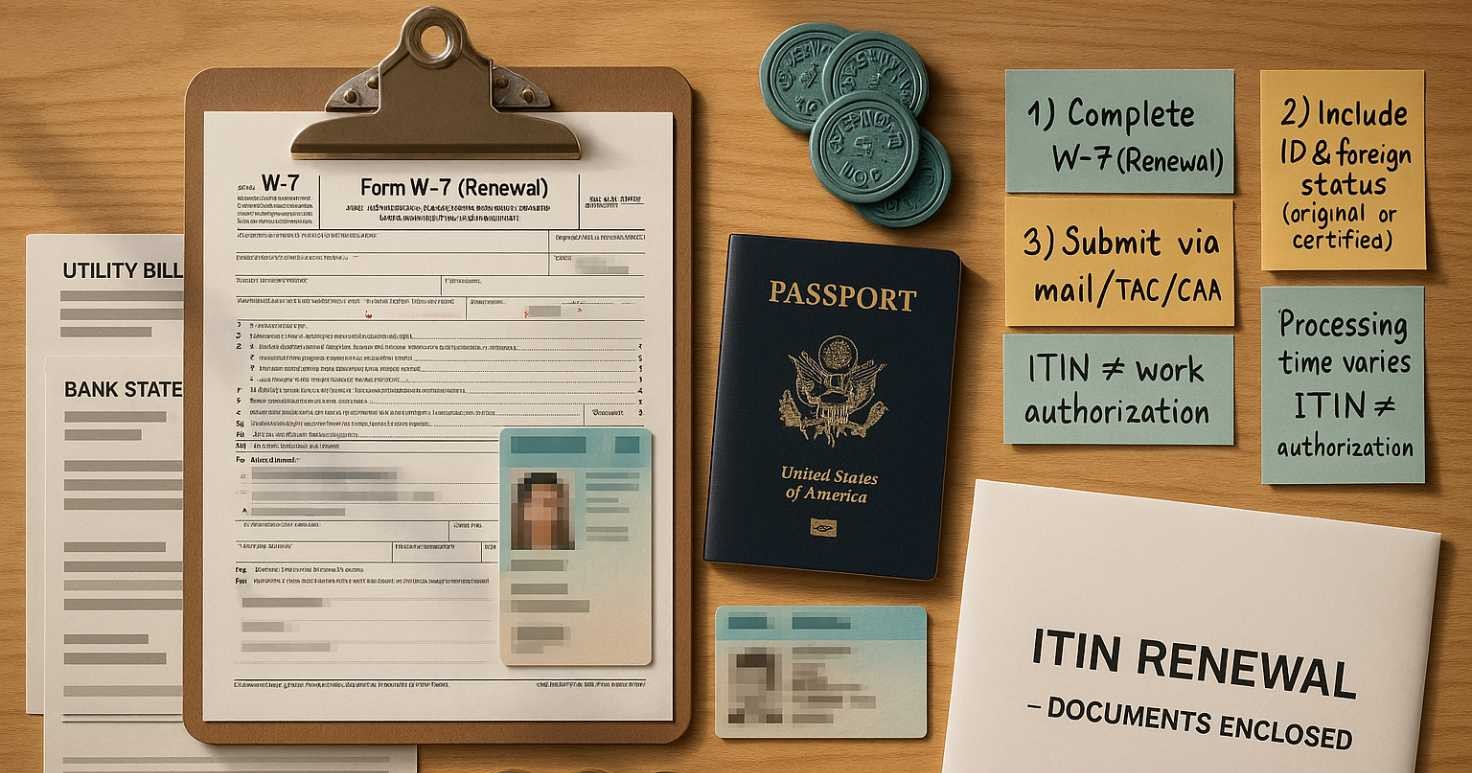
The ITIN renewal process involves several steps to ensure that your identification number remains valid. First and foremost, you must complete Form W-7, which is the official application for an ITIN.
- Gather required documentation to support your application, such as proof of identity and residency.
- Submit your completed Form W-7 along with the supporting documents.
- Choose your submission method: via mail, in person at an IRS Taxpayer Assistance Center, or through Certified Acceptance Agents (CAAs).
It’s important to provide accurate information on your application to avoid any processing delays. Once submitted, the IRS will review your application, which can take several weeks.
How to complete the ITIN renewal form W-7?
Completing Form W-7 is straightforward if you follow the instructions carefully. Here are some steps to guide you:
- Download Form W-7 from the IRS website.
- Fill out the form with accurate personal information, including your name, address, and date of birth.
- Indicate the reason for applying, selecting the option for renewal.
- Attach all required documents that verify your identity and residency.
- Sign and date the form before submission.
Make copies of everything you send to the IRS for your records, as this will be important in case you need to follow up on your application.
When do I need to renew my ITIN?
You should renew your ITIN if you receive a notice from the IRS indicating that your ITIN will expire soon. Additionally, if you have not used your ITIN for the last three tax years, it is advisable to initiate the renewal process.
Be proactive about renewal to avoid any disruptions to your tax filings. The IRS typically sends notifications before your ITIN expires, but it is also your responsibility to monitor the status of your ITIN.
If you’re unsure about the expiration rules, consult the IRS guidelines or seek assistance from a tax professional.
How long does the ITIN renewal process take?
The ITIN renewal process can take considerable time, sometimes up to 11 weeks. It is crucial to plan accordingly and initiate the process as early as possible, especially if you need your ITIN for tax filings or benefits.
During peak tax seasons, processing times may be longer. Therefore, submitting your application well in advance is always a good practice to ensure you receive your renewed ITIN in time.
If you have any urgent needs, consider visiting an IRS Taxpayer Assistance Center or working with a Certified Acceptance Agent for expedited assistance.
What happens if my ITIN expires?
If your ITIN expires, you will not be able to use it for tax filing purposes. This can lead to complications, such as delays in refunds and the potential for penalties. To avoid these issues, it’s important to renew your ITIN as soon as you become aware of its impending expiration.
Expired ITINs can also affect your eligibility for certain tax credits, including the Child and Dependent Care Credit. Therefore, acting promptly is crucial to maintain your tax benefits.
Once your ITIN is renewed, you can continue to file your taxes without any disruption.
How to check my ITIN status online?
To check the status of your ITIN, the IRS provides several options. However, unfortunately, there is no direct online tool to check the status of your ITIN application.
Instead, taxpayers can:
- Call the IRS at their toll-free number to inquire about their ITIN status.
- Check any correspondence received from the IRS regarding your ITIN.
- Use the IRS Online Account feature if you have registered for an account, as it may provide additional information.
Keeping your contact information updated with the IRS is essential, as this ensures you receive all notifications regarding your ITIN status.
Related questions about the ITIN renewal process
How do you check if my ITIN is renewed?
To check if your ITIN has been renewed, you can refer to any confirmation letters or notices you might have received from the IRS after submitting your renewal application. Typically, the IRS will send a letter confirming the status of your renewal.
If you haven’t received any notification, you can contact the IRS directly. Be prepared to provide your personal information for verification purposes, as this will help them locate your records more efficiently.
Additionally, keeping a record of your application submission date may assist in determining how long it has been since you filed for renewal.
Is ITIN the same as SSN?
No, an Individual Taxpayer Identification Number (ITIN) is not the same as a Social Security Number (SSN). An ITIN is specifically designed for individuals who are not eligible for an SSN, primarily nonresident aliens and their dependents.
While both numbers serve as identification for tax purposes, an SSN is typically issued to U.S. citizens and certain eligible noncitizens, while an ITIN is for those who need to comply with U.S. tax laws but do not have an SSN.
Understanding the differences between these identification numbers is crucial for navigating tax responsibilities in the United States.