In the United States, understanding the difference between ITIN and SSN is crucial for newcomers and residents alike. Both numbers serve essential functions, but their purposes and eligibility criteria differ significantly. This article will break down these differences and explain their applications.
Whether you are an immigrant or a U.S. citizen, knowing which number you need is key to navigating financial and legal obligations in the country. Let’s explore the nuances between the Social Security Number (SSN) and the Individual Taxpayer Identification Number (ITIN).
What is the difference between SSN and ITIN?
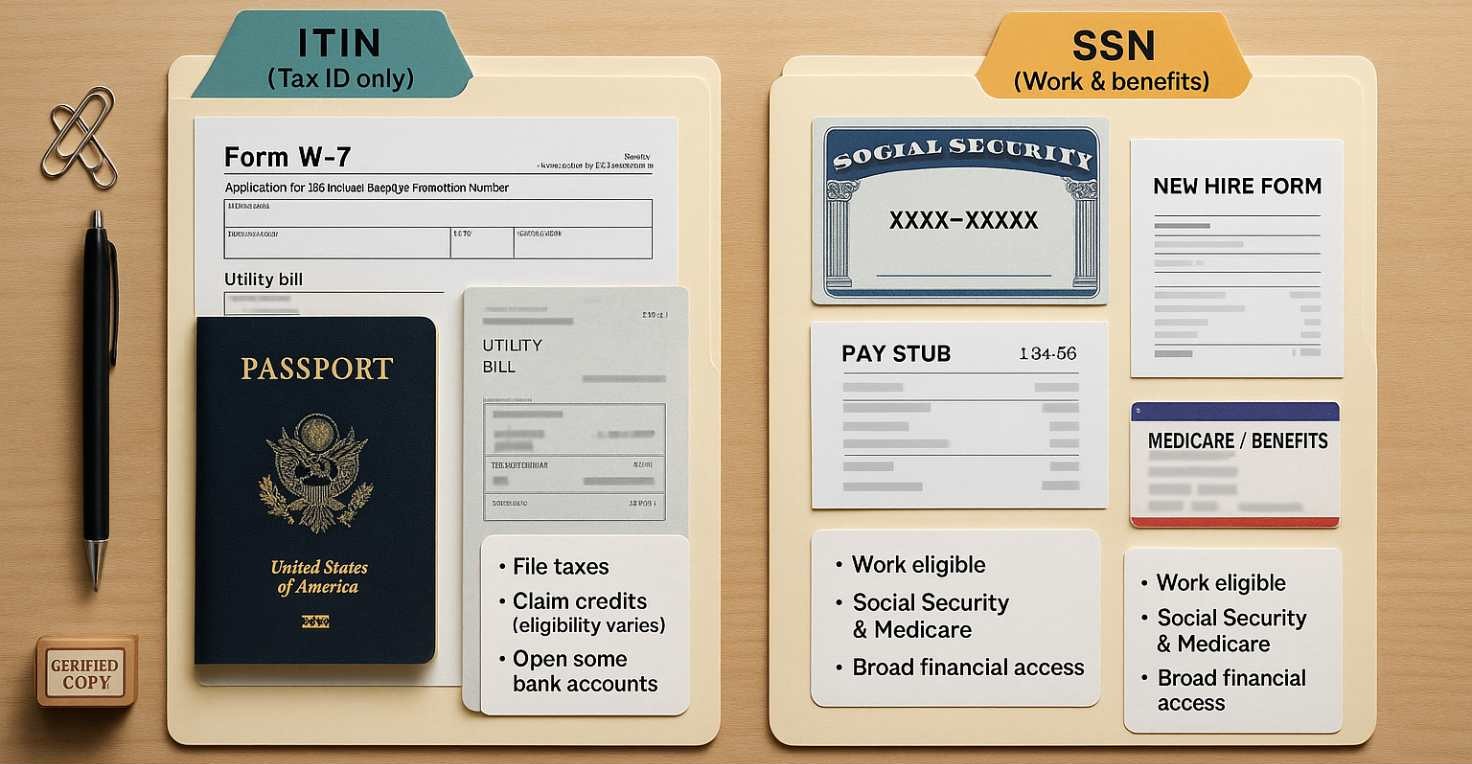
The difference between ITIN and SSN lies primarily in their intended use. An SSN is primarily for U.S. citizens and authorized noncitizen residents, allowing them to work and access various benefits. On the other hand, an ITIN is designed for foreign nationals and individuals who are not authorized to work, mainly serving tax compliance purposes.
Individuals who have an SSN are eligible for government benefits, including Social Security and Medicare. In contrast, those with an ITIN do not have such access since it does not provide work authorization.
In essence, while both numbers are used for tax purposes, they cater to very different groups of people with varying rights and responsibilities. Understanding these distinctions is vital for anyone looking to fulfill their tax obligations in the U.S.
What are the applications for SSN and ITIN?
SSNs provide a pathway to many benefits and services in the U.S. Some of the key applications include:
- Employment opportunities for U.S. citizens and authorized residents.
- Eligibility for Social Security benefits.
- Access to financial services, including loans and credit cards.
- Health insurance coverage through Medicare.
On the other hand, ITINs mainly serve for tax purposes. Some applications include:
- Filing federal tax returns for individuals who do not qualify for an SSN.
- Opening bank accounts.
- Claiming tax benefits and credits.
Therefore, while both numbers may be used for tax compliance, the SSN offers a broader range of applications.
Can I have both ITIN and SSN?
It is generally not advisable to hold both an ITIN and an SSN. If you qualify for an SSN, you should apply for it and discontinue using your ITIN. Having both could create confusion and complications when filing taxes.
If you initially obtained an ITIN while awaiting your SSN, ensure you inform the IRS once you receive your SSN. The IRS will then update your records accordingly and associate your tax obligations and benefits with the SSN.
Ultimately, it’s crucial to maintain only the number that aligns with your legal status and work eligibility to avoid confusion during tax season.
What is an ITIN number?
An Individual Taxpayer Identification Number (ITIN) is a Taxpayer Identification Number issued by the Internal Revenue Service (IRS). It is used for tax processing for individuals who do not qualify for a Social Security Number.
ITINs are primarily assigned to foreign nationals, their spouses, and dependents, allowing these individuals to comply with U.S. tax laws. They do not provide any work authorization or benefits associated with an SSN.
Having an ITIN is important for fulfilling tax obligations, especially for those who earn income in the U.S. without having the legal right to work. It is essential to recognize that an ITIN is only a tax identification number and does not confer legal immigration status.
How to apply for an ITIN?
To apply for an ITIN, individuals must complete Form W-7, which is the application for an IRS Individual Taxpayer Identification Number. The following steps outline the application process:
- Complete Form W-7 accurately and in full.
- Attach valid documentation that supports your foreign status and identity.
- Mail the completed Form W-7 along with your federal tax return to the IRS.
It’s important to note that ITIN applications can take several weeks to process. Therefore, it’s advisable to apply as early as possible to meet tax deadlines.
What can I do with an SSN?
Holding an SSN opens the door to various benefits and services in the United States. Some advantages of having an SSN include:
- Eligibility for government benefits like Social Security and Medicare.
- Access to various financial services, including loans, credit cards, and mortgages.
- Ability to work legally in the U.S. and file tax returns.
Moreover, an SSN is often required for employment, making it essential for anyone looking to establish a career in the U.S. Financial institutions typically require an SSN to open bank accounts or apply for credit, making it a crucial number for financial transactions.
What happens if I’m ineligible for an SSN?
If an individual is ineligible for an SSN, the alternative is to obtain an ITIN. This allows individuals to meet their tax obligations even without work authorization. An ITIN enables them to file tax returns and possibly claim tax benefits.
Moreover, having an ITIN can help undocumented immigrants to open bank accounts and access some financial services, although not as extensively as those with an SSN.
In summary, while not having an SSN limits access to certain benefits, obtaining an ITIN provides a means to comply with tax laws and engage in some financial transactions.
Related Questions about the difference between ITIN and SSN
Is ITIN the same as SSN?
No, an ITIN is not the same as an SSN. The primary distinction lies in their purpose and eligibility criteria. An SSN is intended for U.S. citizens and authorized noncitizen residents, granting them the ability to work and access benefits. Meanwhile, an ITIN is for foreign nationals and individuals not eligible to work, primarily serving tax compliance needs.
Can I work in the US with an ITIN number?
No, having an ITIN does not authorize individuals to work in the United States. An ITIN is strictly for tax purposes and does not provide any employment benefits or rights. If you are eligible to work, you should instead apply for an SSN.
Can I use my SSN instead of a TIN?
Yes, if you have an SSN, you can use it instead of a TIN. For most tax-related purposes, the SSN serves as a TIN. However, if you do not qualify for an SSN, you must apply for an ITIN to fulfill tax obligations.
How can I transfer my ITIN to SSN?
To “transfer” your ITIN to an SSN, you must first apply for an SSN if you are eligible. Once you receive your SSN, inform the IRS to ensure your tax records are updated. The IRS will associate your tax obligations and benefits with the SSN, and you should stop using your ITIN.
In conclusion, understanding the difference between ITIN and SSN is vital for anyone looking to navigate the U.S. tax system and gain access to financial services. By knowing which number to obtain based on individual circumstances, individuals can ensure compliance with tax obligations and access available benefits.