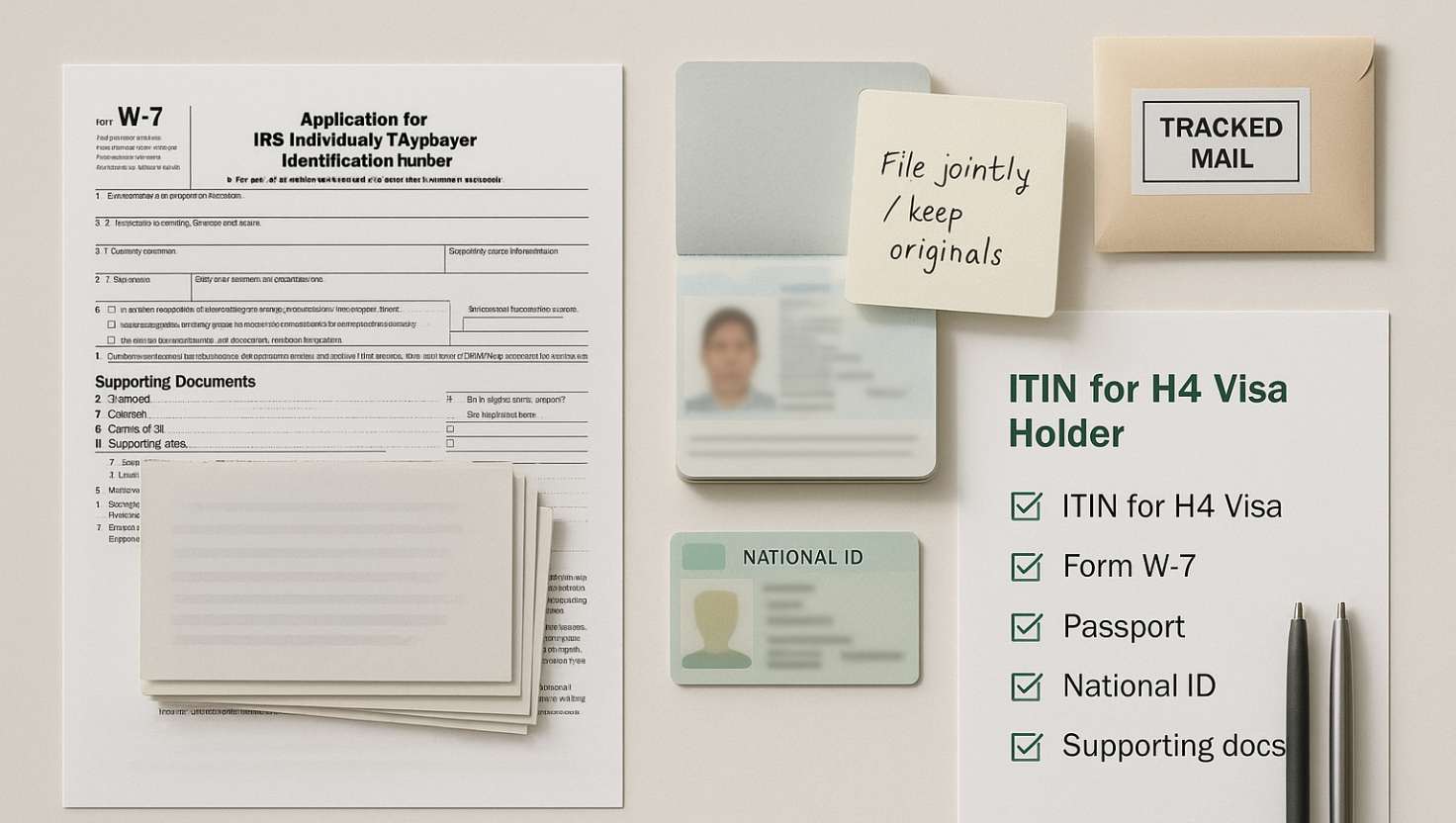
Obtaining an Individual Taxpayer Identification Number (ITIN) is essential for H4 visa holders, especially when it comes to tax compliance in the United States. This guide will provide a clear roadmap through the ITIN application process, addressing common concerns faced by H4 visa holders.
Understanding the ITIN application process can seem daunting, but it doesn’t have to be. With the right information and guidance, you can navigate the process smoothly.
What is an ITIN and why is it important for H4 visa holders?
An ITIN, or Individual Taxpayer Identification Number, is a tax processing number assigned by the IRS. It is crucial for those who need to file federal income tax returns but do not qualify for a Social Security Number (SSN). For H4 visa holders, having an ITIN is necessary for fulfilling tax obligations in the U.S.
The primary purpose of the ITIN is to allow individuals to comply with U.S. tax laws. Many H4 visa holders might also be dependents of H1B visa holders, and having an ITIN can help in filing joint or separate tax returns. Furthermore, it ensures that individuals are part of the tax system, which can be beneficial in the long run.
Moreover, acquiring an ITIN can facilitate other financial processes, such as opening bank accounts or applying for credit cards. Understanding these benefits makes the ITIN application process even more important for H4 visa holders.
What documents are needed to apply for an ITIN?
When applying for an ITIN, specific documentation is required to verify your identity and foreign status. Here are the essential documents needed:
- Form W-7: This is the official application form for an ITIN.
- Proof of identity: Documents like a passport, national identification card, or a driver’s license are accepted.
- Proof of foreign status: This can be established using the same documents that prove your identity.
- Tax returns: If applicable, you may need to submit tax returns along with your application.
- Additional supporting documents: Depending on your individual circumstances, you may need to provide additional documents to support your application.
It’s crucial to ensure that all documents are original or certified copies. This requirement can sometimes lead to confusion, so adhering to these specifications is vital for a successful application.
If you’re unsure about which documents to provide, consulting with a tax professional or a Certifying Acceptance Agent (CAA) can be beneficial.
How to submit your ITIN application: in-person or by mail?
There are two primary methods for submitting your ITIN application: in-person or by mail. Each method has its advantages, and choosing the right one can streamline your application process.
If you opt for submitting your application in person, you can visit an IRS Taxpayer Assistance Center. This method allows you to receive immediate feedback and assistance with your application. Additionally, having an agent verify your documents can help avoid potential issues.
Alternatively, you may choose to mail your application. If you go this route, ensure that you send your application to the correct address provided by the IRS. Remember to include all necessary documents and copies to support your application. Although this method may take longer, it is a common option for many H4 visa holders.
Regardless of the method chosen, be sure to follow up on your application status after submission. This proactive approach ensures you stay informed about any potential issues.
How long does it take to receive an ITIN after application?
The processing time for the ITIN application can vary, but generally, you can expect to receive your ITIN within a specific timeframe. Typically, it takes about seven weeks to process an ITIN application. However, this duration may extend during peak tax filing seasons.
It is essential to submit a complete application with all required documentation to avoid delays. If your application is incomplete, the IRS may send you a notice requesting additional information, which can further prolong the process.
Once your application is approved, you will receive your ITIN via mail. Keep an eye on your mailbox during this time, as it’s crucial to ensure that your ITIN is received safely.
What are the common challenges faced by H4 visa holders when applying for an ITIN?
While the process of obtaining an ITIN is straightforward, H4 visa holders often encounter several challenges.
One common issue is gathering the necessary documents. Many individuals may not have a passport or sufficient identification, making it difficult to meet the requirements. Additionally, understanding the specific documentation needed can create confusion.
Another challenge is the requirement to communicate with the IRS. Some applicants may struggle to understand IRS notices or how to respond effectively, leading to potential delays in processing their applications.
Lastly, navigating the application process can be daunting without professional assistance. Many H4 visa holders might benefit from the help of a tax professional or a Certifying Acceptance Agent to avoid common pitfalls when applying for ITIN for H4 visa holders.
How has the ITIN application process changed recently?
In recent years, the IRS has streamlined the ITIN application process. The changes focus on improving the efficiency of the process and clarifying the requirements for applicants.
For instance, recent revisions have led to a clearer list of acceptable documents for identity and residency proofs. This change helps applicants understand what is required and minimizes confusion during the application process.
Additionally, the IRS has increased outreach efforts to educate individuals on the ITIN application process. This includes improved online resources and access to information about the application procedures, which is beneficial for H4 visa holders.
Overall, these changes have made the ITIN application process more accessible and manageable for H4 visa holders.
Where can H4 visa holders seek help with their ITIN application?
H4 visa holders have several resources available to assist them with their ITIN applications. One of the most reliable options is the IRS itself. The IRS offers various resources online, including forms and guidelines, to help applicants understand the process.
Additionally, you may consider visiting a local IRS Taxpayer Assistance Center. Here, you can receive personalized assistance with your application. Staff at these centers can provide guidance on document verification and answer questions about the application process.
Another useful resource is the Certifying Acceptance Agents (CAAs). These agents are authorized by the IRS to assist individuals in completing their ITIN applications. They can review your documents and submit your application on your behalf, which can expedite the process.
Overall, leveraging these resources can greatly enhance your understanding of the ITIN application process and help you avoid common mistakes.
Related questions about ITIN for H4 visa holders
Can an H4 visa holder apply for SSN?
H4 visa holders are generally not eligible for a Social Security Number (SSN) unless their status changes. The SSN is primarily designed for individuals authorized to work in the U.S., which typically does not include H4 visa holders. However, if you are an H4 holder with a valid work permit (EAD), you can apply for an SSN.
Can someone with an ITIN number work in the US?
Having an ITIN does not grant work authorization in the U.S. An ITIN is solely for tax purposes. To work legally in the U.S., individuals must have the appropriate visa or work authorization.
Can H4 visa holders apply for green card?
Yes, H4 visa holders may apply for a green card under certain conditions. They need to have a qualifying relationship with an H1B visa holder who is applying for a green card. It’s crucial to understand the specific requirements and processes involved.
Who is eligible for H4 dependent visa?
The H4 dependent visa is available to immediate family members of H1B visa holders, which includes spouses and unmarried children under 21 years of age. This visa allows them to stay in the U.S. as dependents of the primary H1B visa holder.