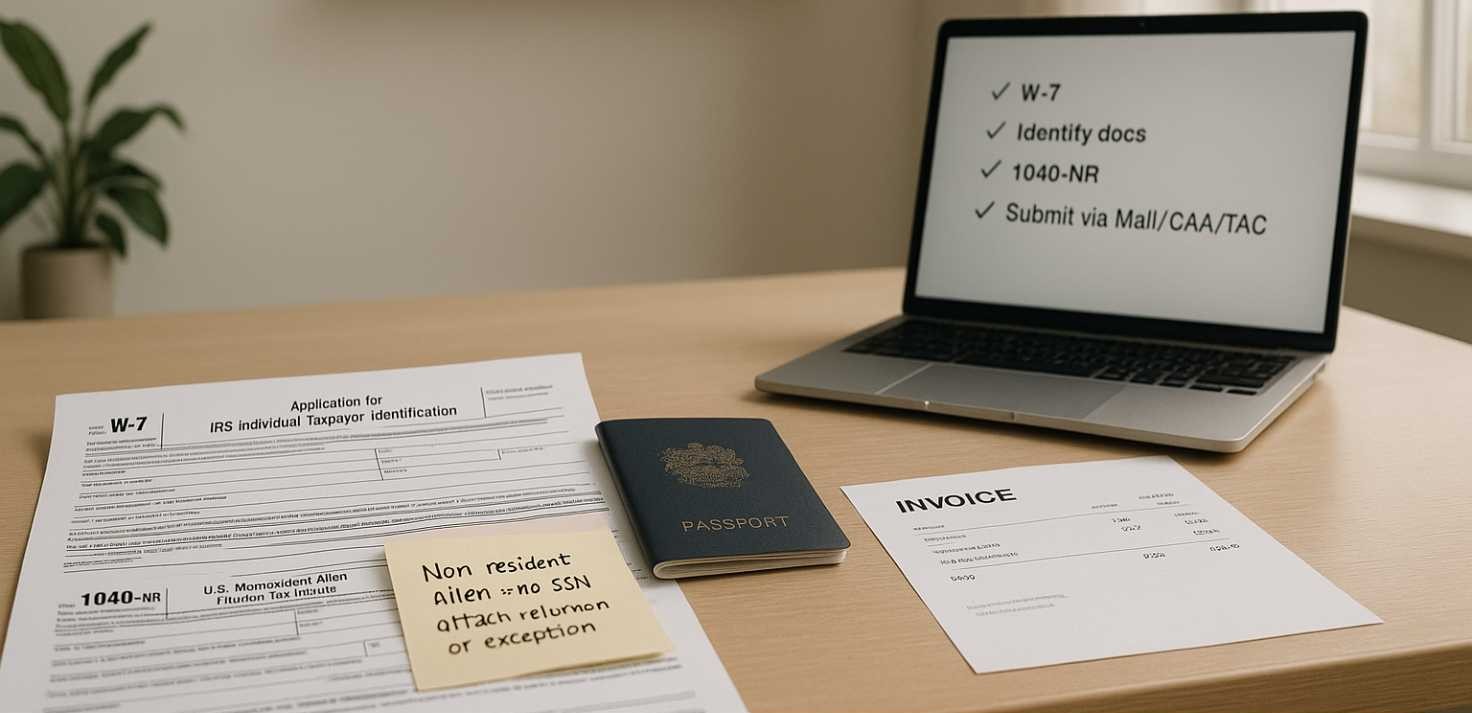
An Individual Taxpayer Identification Number (ITIN) is essential for non-resident aliens who need to engage with the U.S. tax system. This article explores the various aspects of acquiring an ITIN, including its necessity, the application process, and what to do if you encounter issues.
Understanding the ITIN for non-resident aliens is crucial, especially for tax obligations and compliance. Here, we aim to provide a comprehensive guide to help you navigate the complexities of obtaining an ITIN.
What is an Individual Taxpayer Identification Number (ITIN)?
An Individual Taxpayer Identification Number (ITIN) is a unique identifier issued by the IRS for tax purposes. It is specifically designed for individuals who do not qualify for a Social Security Number (SSN).
The ITIN allows non-resident aliens to file tax returns, claim tax treaty benefits, and comply with U.S. tax laws. It is important to note that possessing an ITIN does not provide any immigration benefits or alter an individual’s immigration status.
In essence, the ITIN serves as a means for non-residents to fulfill their tax obligations while ensuring they are recognized by the IRS. This includes reporting income and potential tax liabilities.
Why do I need an ITIN as a non-resident?
Obtaining an ITIN is vital for several reasons. Firstly, it allows non-resident aliens to file their federal tax returns as required by law. The IRS mandates that anyone earning income in the U.S. must report that income, and an ITIN facilitates this process.
Secondly, if you are eligible for tax treaty benefits, having an ITIN enables you to claim these benefits, which could reduce your overall tax liability. Without an ITIN, you may miss out on significant savings.
- Comply with U.S. tax laws.
- File tax returns accurately.
- Claim tax treaty benefits.
Lastly, obtaining an ITIN can help establish a financial presence in the U.S., which can be beneficial for various financial transactions, even if you are not a resident.
How can I get an ITIN from abroad?
For non-residents living outside the U.S., the process of obtaining an ITIN requires careful consideration. You can apply for an ITIN by completing Form W-7, which is the application form for an Individual Taxpayer Identification Number.
To submit your application while abroad, you have two primary options: you can either mail your application to the IRS or use the services of a Certifying Acceptance Agent (CAA), who can help with the application process and submit it on your behalf.
- Complete Form W-7.
- Gather required documents.
- Submit your application via mail or through a CAA.
Make sure that all documents are certified copies to avoid delays in processing your application. This is essential for ensuring that your ITIN is issued without any hiccups.
What documents are required to apply for an ITIN?
When applying for an ITIN, specific documents must be submitted alongside your Form W-7. These documents are necessary to establish your identity and foreign status.
Generally, you will need to provide:
- A valid passport or
- Two other forms of identification, such as a national identification card, U.S. driver’s license, or birth certificate.
It is crucial that these documents are either original documents or certified copies from the issuing agency. The IRS requires this to process your application efficiently.
How long does it take to receive my ITIN?
The processing time for obtaining an ITIN can vary depending on several factors, including the time of year and the completeness of your application. Typically, you can expect to wait anywhere from six to eight weeks for your ITIN to be processed.
However, during peak tax filing season, processing times may increase. To avoid delays, ensure that all documentation is accurate and complete when you submit your application.
If you do not receive your ITIN within this timeframe, it is advisable to contact the IRS to check on the status of your application.
How do I apply for an ITIN online?
As of now, you cannot apply for an ITIN directly online through the IRS. However, you can complete Form W-7 online and print it out for submission. The application must then be mailed to the IRS or submitted through a Certifying Acceptance Agent.
When preparing your application, it is crucial to ensure that all required documentation accompanies your Form W-7. This helps to avoid any unnecessary delays in processing.
While you cannot apply directly online, using online resources to complete your application can streamline the process and ensure accuracy before submission.
What should I do if my ITIN is lost or expired?
If your ITIN is lost, it is essential to act promptly. You can retrieve your ITIN by contacting the IRS directly. They may require you to submit specific identification documents to verify your identity before issuing you a new number.
In cases where your ITIN has expired, you will need to renew it. The process for renewal is similar to the initial application. Complete Form W-7 and submit it along with the necessary documentation to the IRS.
Remember that an expired ITIN may hinder your ability to file taxes accurately. Thus, timely renewal is crucial to maintain compliance with U.S. tax laws.
Related questions about the ITIN for non-resident aliens
How do I get an ITIN number for a non-resident?
To obtain an ITIN number for a non-resident, you need to fill out Form W-7 and submit it to the IRS along with necessary identification documents. You can apply either by mailing your application or utilizing the services of a Certifying Acceptance Agent.
It is essential to ensure that all documents are certified and that the application is complete to avoid delays in processing your ITIN. The process may take several weeks, so applying early is advisable.
Does a non-resident alien need an ITIN?
Yes, a non-resident alien needs an ITIN if they are required to file a federal tax return or if they are eligible for tax treaty benefits. The ITIN allows them to comply with U.S. tax laws and report any income earned within the United States.
Having an ITIN is essential for fulfilling tax obligations, even if the individual does not have a Social Security Number. Without an ITIN, non-residents may face penalties or complications with the IRS.
Can a non-resident get a tax ID number?
A non-resident can obtain a tax ID number by applying for an ITIN. This number serves as a means for the IRS to identify individuals who are required to file tax returns or claim benefits. The ITIN is specifically designed for those who do not qualify for a Social Security Number.
Applying for an ITIN is a straightforward process, but it requires careful attention to the documentation and submission process to ensure a smooth experience with the IRS.
Who has a valid reason to apply for an ITIN?
Individuals who have a valid reason to apply for an ITIN include non-resident aliens who need to file a U.S. tax return, claim tax treaty benefits, or report income earned in the United States. This includes foreign nationals who are investors, students, or employees.
It is important for anyone who meets these criteria to apply for an ITIN as it facilitates compliance with U.S. tax laws and helps avoid potential legal issues.